

The first moves of a Baghchal game matter a lot for the goats. One careless placement can lose a goat in the first minute.
In chess, openings have famous names and books. Baghchal has no official opening names. So we did something different. We wrote a small computer program that follows the rules, and we asked it a simple question: which first moves keep every goat safe?
This guide shows the answer. We call the ideas by our own names, to make them easy to remember. They are not official names.
Not sure about the rules yet? Read the complete guide first.
What "safe" means here
A goat is safe when no tiger can capture it, whatever the tigers do. A goat is safe on a line when the point behind it is full, or when there is no point behind it (the edge of the board).
The four safe first moves
At the start, the goat player can place the first goat on 21 points. We asked the computer a hard question about each one. Can the goats avoid losing any goat for the next three placements, however the tigers play?
For 17 of the 21 points, the answer is no. The tigers can force a capture within a few turns. For four points, the answer is yes. These are the middle points of the four edges.
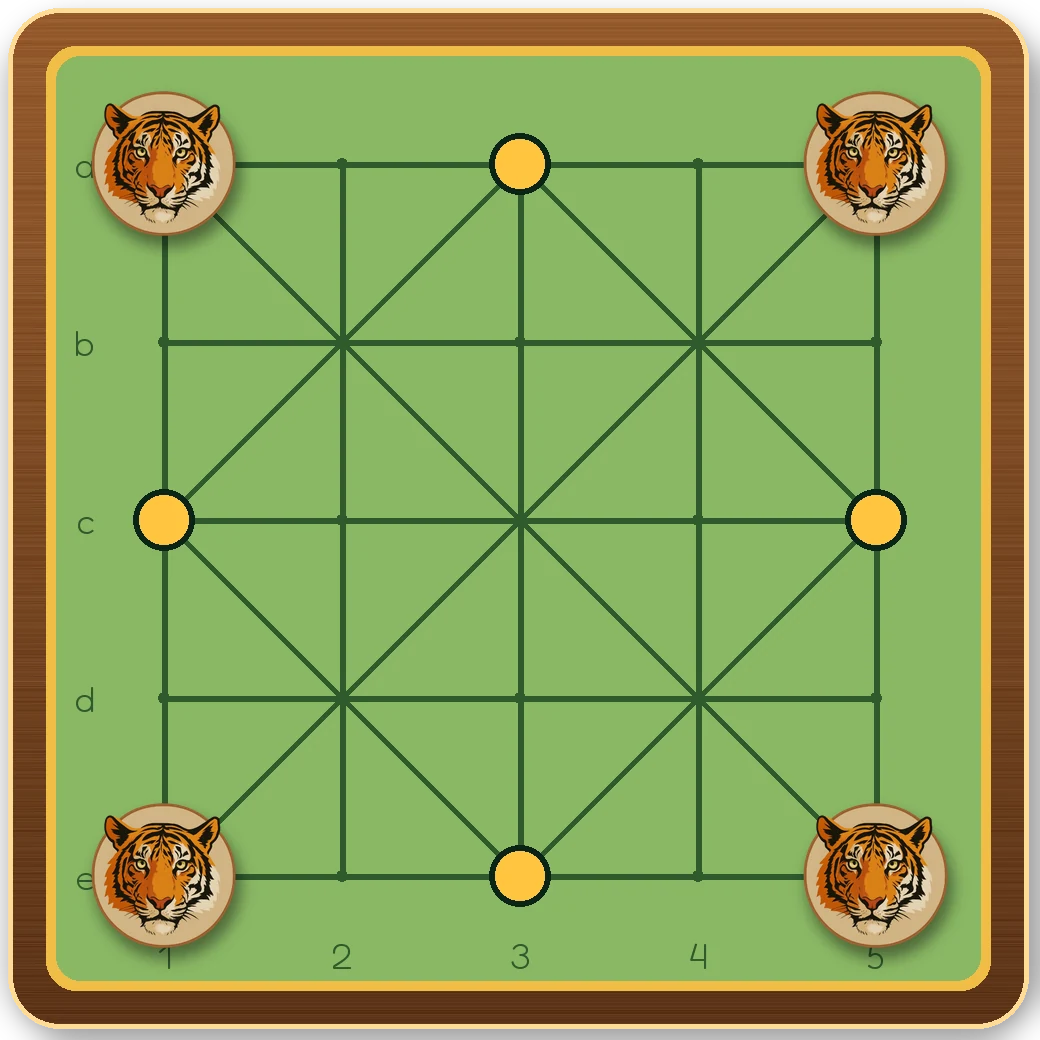
We call this idea Edge Middle. Start with a goat on the middle of an edge.
Why other first moves fail
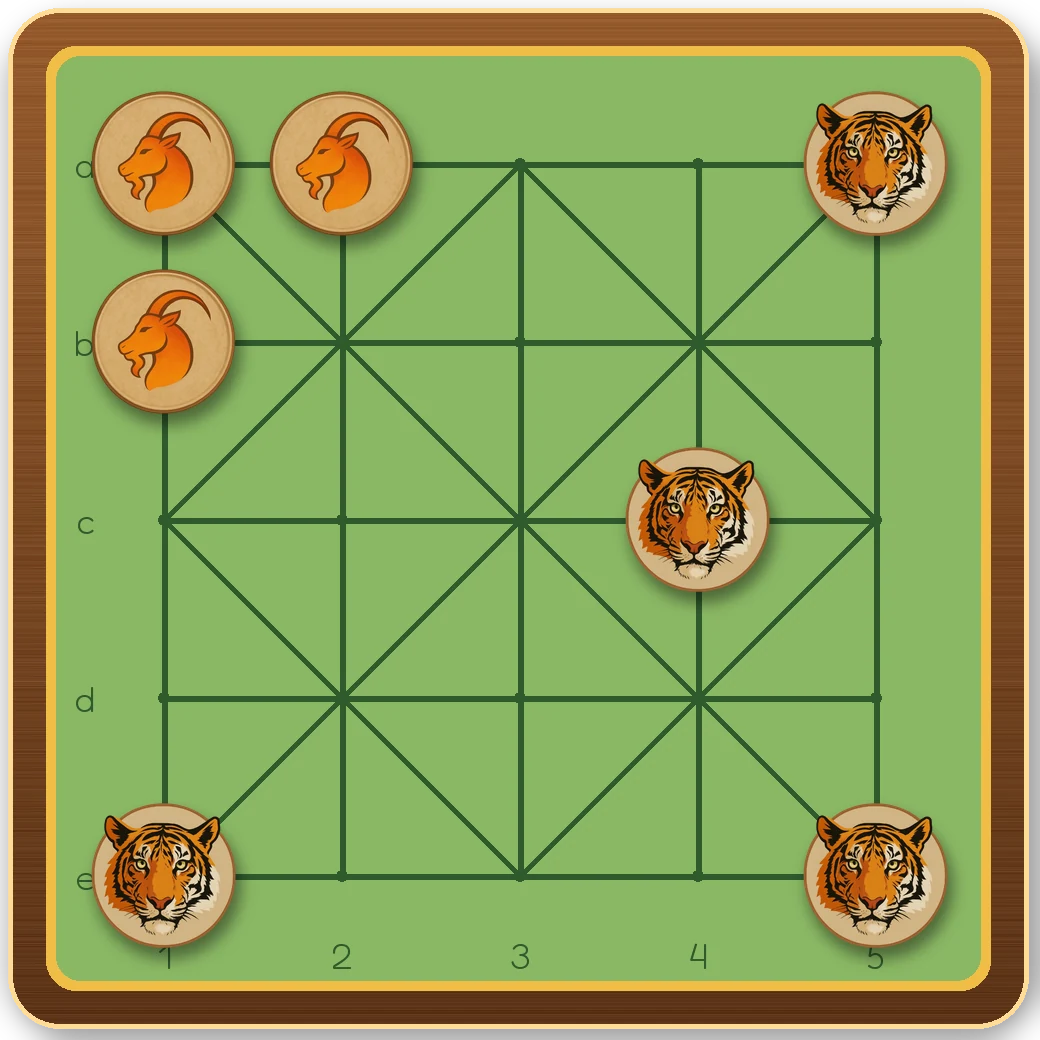
Some first moves lose a goat at once. A goat on b2 is next to the tiger on a1. The point behind it, c3, is empty. The tiger jumps.
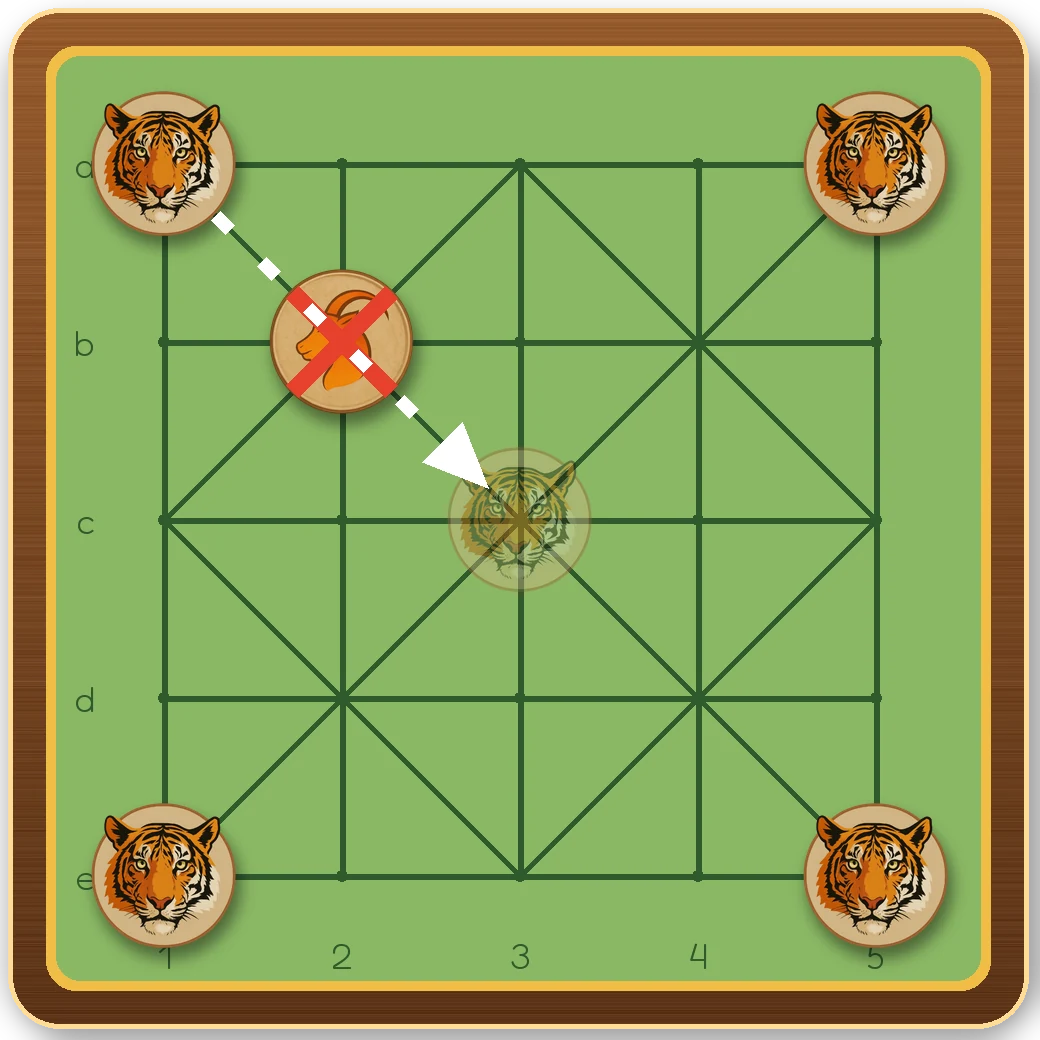
Other moves, like a goat in the center, do not lose a goat at once. But our computer search shows that the tigers can still force a capture within the next three goat placements. The danger is slow, not sudden.
Three safe shapes
After your first goat, the next goals are simple. Put each new goat where it is safe. Groups of goats on the edge are very hard to capture. We checked each shape below. In each one, no goat can be captured, wherever the tigers stand.
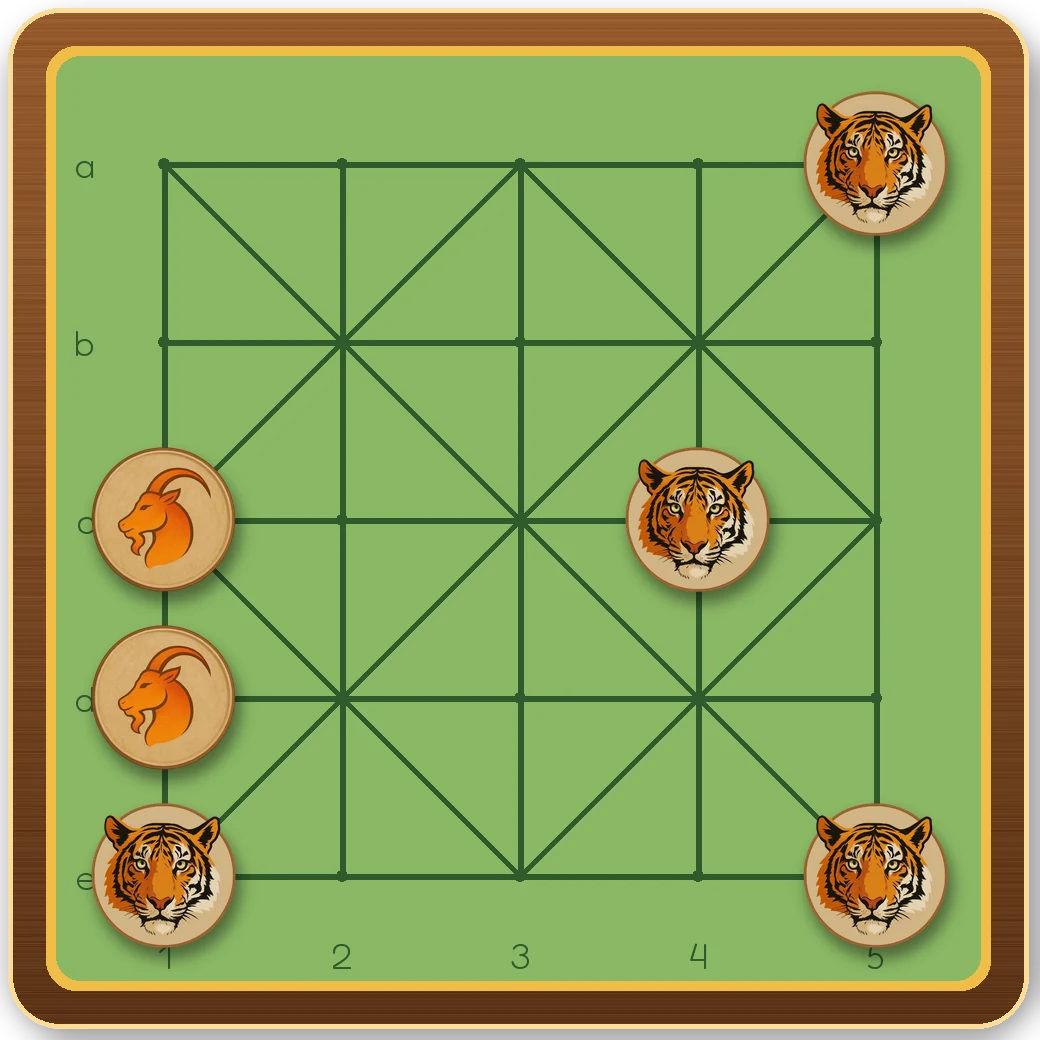
Shape 1: Edge Pair
Two goats side by side on an edge. Each goat covers the point behind the other.
Shape 2: Edge Wall
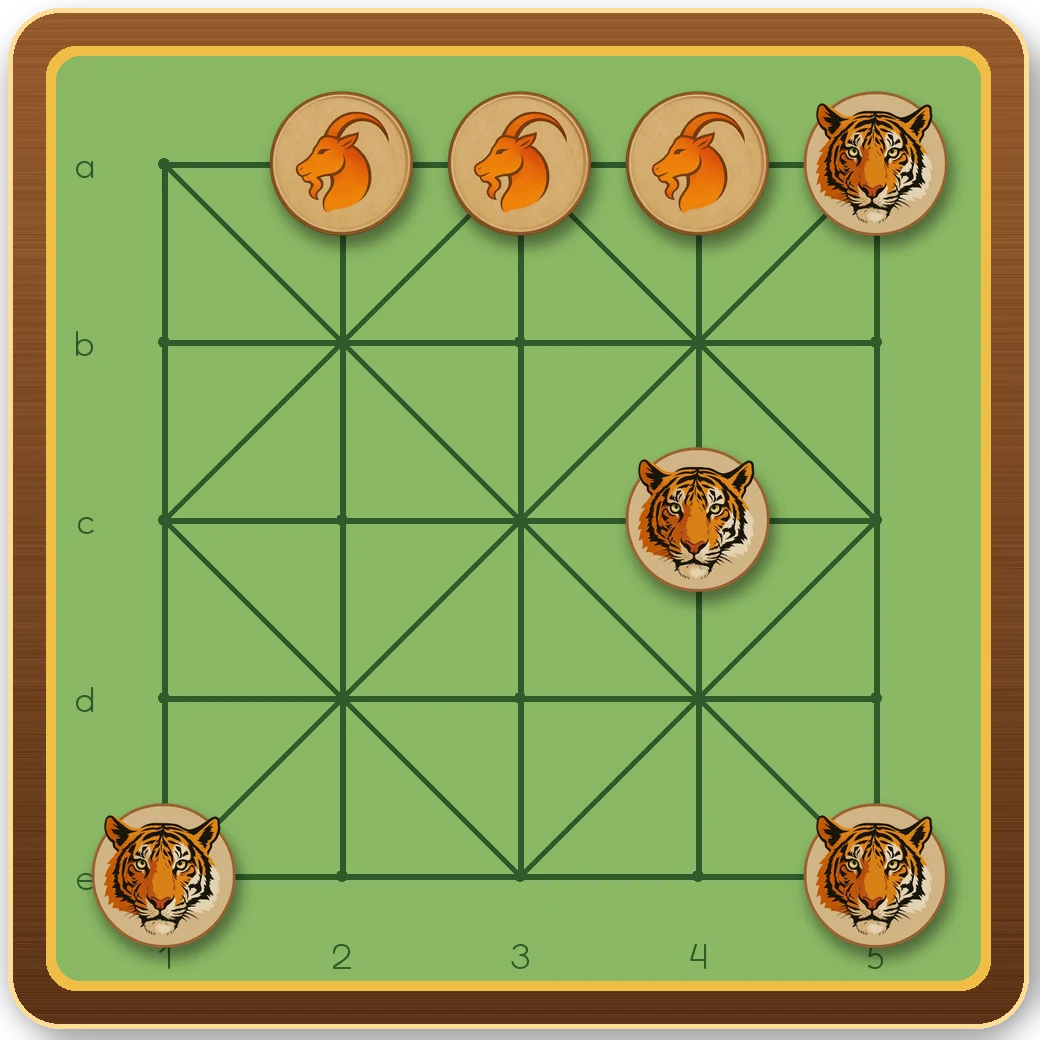
Three or more goats in a row on an edge. The longer the wall, the more it protects.
Shape 3: Corner Block
A goat in a corner, with goats next to it. A corner goat can never be captured. Goats next to it are covered too. You can only use a corner after the tiger has left it.
When a tiger comes close: fill the point behind
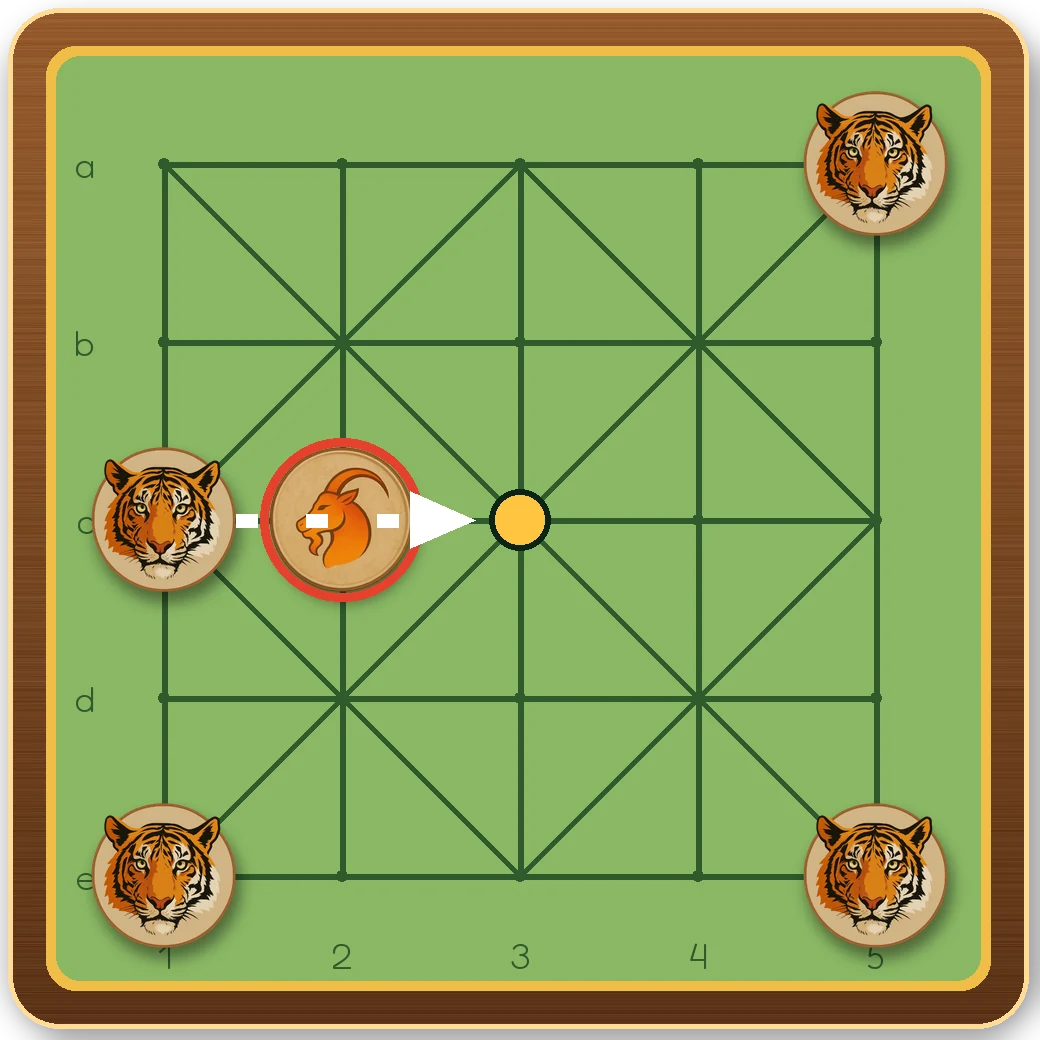
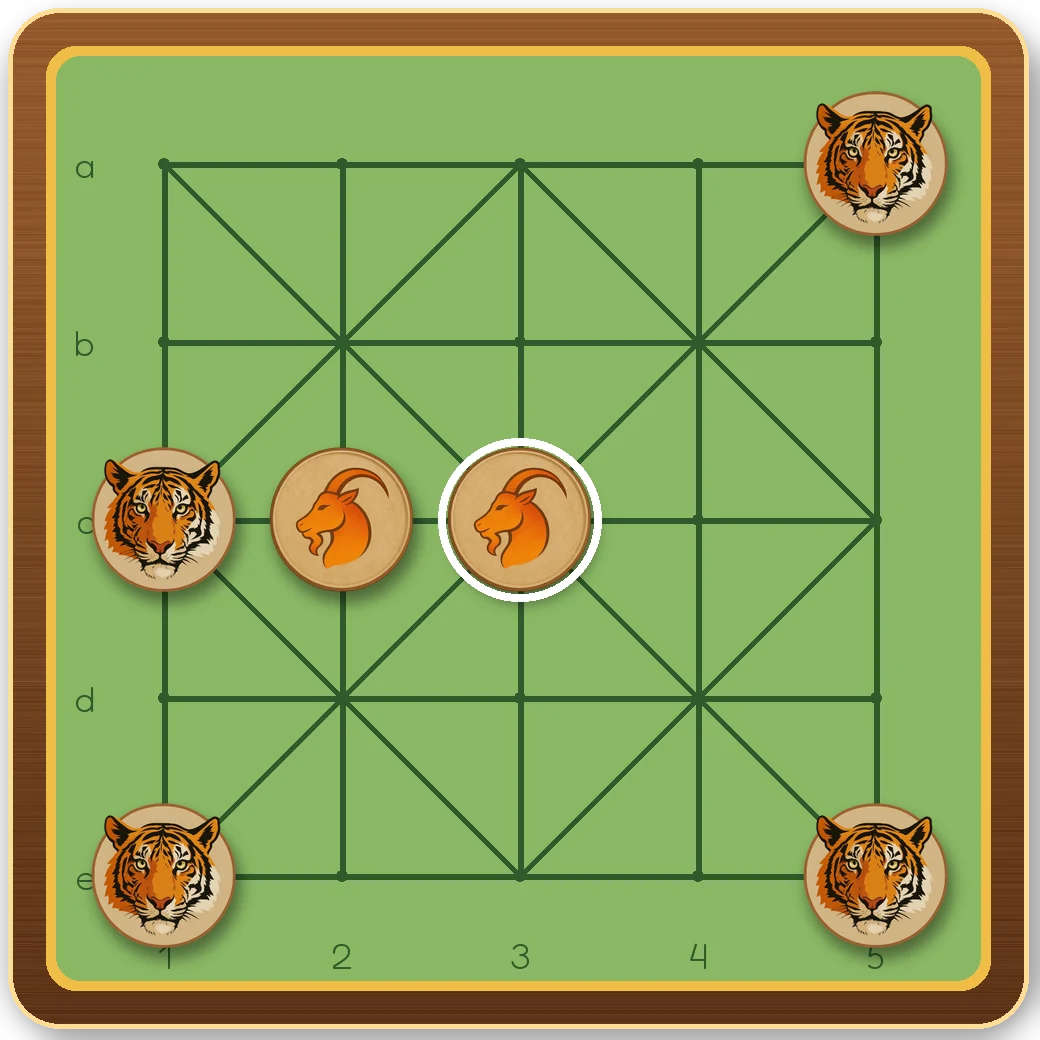
Sooner or later a tiger will step next to one of your goats. If the point behind that goat is empty, you must act.
A simple plan for the opening
- Place your first goat on the middle of an edge.
- Build Edge Pairs and Edge Walls. Keep your goats together.
- Before each placement, check the point behind every goat near a tiger.
- Use a corner only when a tiger has left it.
- Stay calm. You must place all 20 goats, so you are never in a hurry.
How we checked
We wrote a program that knows all the rules: the board, the lines, the jumps and the two phases. For each first move, the program looked ahead through every possible tiger reply and every goat reply, for the next three goat placements. It marked a first move as safe only if the goats could avoid any capture whatever the tigers did. We also checked every shape with a simple test: a goat is capturable only if some line through it has two ends that are not goats.
This is our own analysis, and it is only a guide. Researchers have also studied the whole game with computers. We explain what they found in our post on whether Baghchal is solved.
Play Baghchal on your phone
Baghchal Online lets you practice or play for fun in four ways:
- Play real people online.
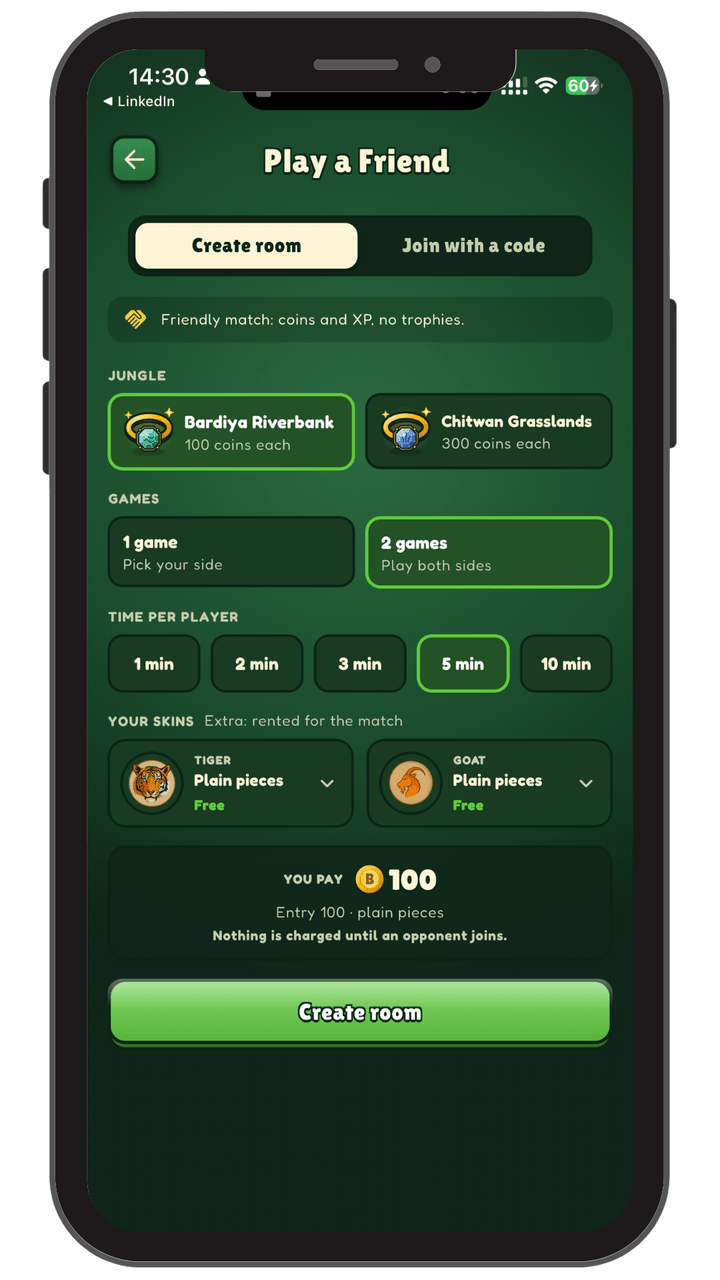
- Make a private room and send the code to a friend.
- Play 34 creatures that get harder as you win.
- Use Pass and Play to share one phone with a friend. No internet needed.
The app is on Google Play for Android. An iPhone version is coming soon.

Questions and answers
What is the best first move for goats in Baghchal?
In our computer check, the safe first moves are the middle points of the four edges: a3, c1, c5 and e3.
Can the goats lose a goat in the first move?
Yes. A goat next to a corner tiger with an empty point behind it, such as b2, is captured at once.
Are the opening names official?
No. Baghchal has no official opening names. We use our own names to make the ideas easy to remember.
Is a goat in the center a good first move?
It does not lose a goat at once, but our search found that the tigers can force a capture within the next three goat placements.
How many goats can the goats afford to lose?
Up to four. The tigers win when they capture five.